
When people hear melatonin, the first thing that comes to mind is usually an oral supplement for sleep support and circadian rhythm regulation. However, with advances in dermatological science and cosmetic R&D, melatonin is stepping out of the pill bottle and onto the vanity table. Thanks to its powerful antioxidant, anti-inflammatory, and reparative properties, this ingredient is rapidly becoming a sought-after active in high-end skincare and overnight treatment products.
We explore melatonin’s application in cosmetics—covering its biological background, mechanisms of action, key benefits.
1. Melatonin and the Skin: A Natural Connection
Melatonin (N-acetyl-5-methoxytryptamine, CAS 73-31-4) is an indoleamine hormone secreted primarily by the pineal gland. Interestingly, research confirms that the skin itself functions as a peripheral melatonin-generating organ:
• Human keratinocytes, fibroblasts, and melanocytes can all synthesize melatonin independently.
• Cutaneous melatonin receptors (MT1, MT2) are present, regulating the skin’s own circadian rhythms, antioxidant defenses, and barrier homeostasis.
• Nighttime is the peak period for cutaneous repair and local melatonin synthesis—providing a physiological basis for the concept of “beauty sleep.”
Thus, topical melatonin isn’t just a foreign hormone; it acts more like a targeted reinforcement of the skin’s innate defense system.
2. Key Mechanisms in Skincare
Melatonin’s efficacy in topical applications stems from multi-target, cascading protection rather than a single pathway:
A. Potent Antioxidant & Free Radical Scavenging
Often described as the core molecule of the “antioxidant cocktail”:
• Direct Scavenging: Neutralizes a wide array of reactive oxygen species (ROS), including hydroxyl radicals (•OH), superoxide anions, hydrogen peroxide, and singlet oxygen.
• Indirect Activation: Upregulates gene expression of intracellular antioxidant enzymes—Superoxide Dismutase (SOD), Glutathione Peroxidase (GPx), and Catalase (CAT)—via the Nrf2 pathway, boosting the cell’s intrinsic defenses.
• Metabolic Continuation: Its oxidation products, AFMK and AMK, remain potent antioxidants, creating a “one-molecule, multi-round” protective effect.
B. Photoprotection & Anti-Photoaging
Ultraviolet radiation (UVB/UVA) is a primary driver of extrinsic skin aging. Studies show topical melatonin can:
• Reduce UV-induced DNA damage and keratinocyte apoptosis.
• Inhibit Matrix Metalloproteinases (MMPs), slowing the degradation of collagen and elastin fibers.
• Mitigate post-sunburn erythema and oxidative stress, working synergistically with sunscreen filters.
C. Anti-Inflammation & Barrier Repair
Melatonin suppresses pro-inflammatory cytokines (IL-6, IL-1β, TNF-α) and downregulates iNOS and COX-2 expression. It shows soothing potential for sensitive skin and mild inflammatory conditions (such as atopic dermatitis models), while supporting barrier recovery by modulating lipid metabolism and tight junction proteins.
D. Collagen Synthesis & Anti-Wrinkle Action
Via MT1 receptor-mediated signaling, melatonin stimulates fibro blast production of collagen (COL17A1, Type I/III) and fibronectin. Clinical observations have noted improvements in skin elasticity (+30%) and reductions in wrinkle depth (-11% to -31%) in small-scale human studies.
E. Pigmentation Modulation & Brightening Aid
Since inflammation is a key trigger for tyrosinase activation, melatonin’s anti-inflammatory action indirectly curbs inflammation-induced melanogenesis. Some studies also suggest mild inhibitory effects on tyrosinase activity, positioning it as a supportive ingredient in brightening and spot-correcting formulations.
F. Hair Follicle Regulation & Scalp Care
Melatonin receptors (MT1/MT2) exist in hair follicle tissues. Melatonin can antagonize androgen-driven follicular miniaturization, prolonging the anagen (growth) phase. Consequently, it is being explored in scalp serums targeting androgenetic alopecia and oxidative scalp stress.
3. Typical Cosmetic Applications
Aligning with its physicochemical traits and circadian biology, melatonin features prominently in these categories:
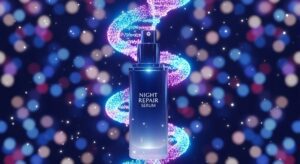
• Overnight Repair Serums / Ampoules: Often combined with bakuchiol and vitamin C derivatives in “night serums” designed to sync with beauty sleep cycles.
• Nourishing Night Creams / Sleeping Masks: Leverage occlusive carriers for sustained overnight release, focusing on barrier reinforcement and antioxidation.
• Soothing & Recovery Creams: Targeted at sensitive skin or post-procedure recovery, often paired with ceramides and panthenol.
• Representative brands such as ISDIN, Peter Thomas Roth, Zelens, and Murad have launched relevant products.
• Scalp Treatments & Hair Serums: Explored for mitigating oxidative stress on the scalp and supporting hair growth cycles.
Antioxidant.
4. Conclusion & Outlook
The application logic of melatonin in cosmetics marks a shift from “circadian modulation” to “harnessing the skin’s circadian-aligned repair and antioxidation.” Its core value lies in:
1. Multi-targeted antioxidation and photoprotective synergy.
2. High compatibility with the skin’s native melatoninergic system.
3. Ideal suitability for night repair, anti-aging, and barrier-soothing product positioning.
Looking ahead, as delivery technologies mature, more large-scale clinical data emerges, and regulatory safety databases expand, melatonin is poised to transition from a “conceptual additive” to a “evidence-based core active.” It is set to secure a more established role in anti-aging, photo-protection, and scalp care segments.